

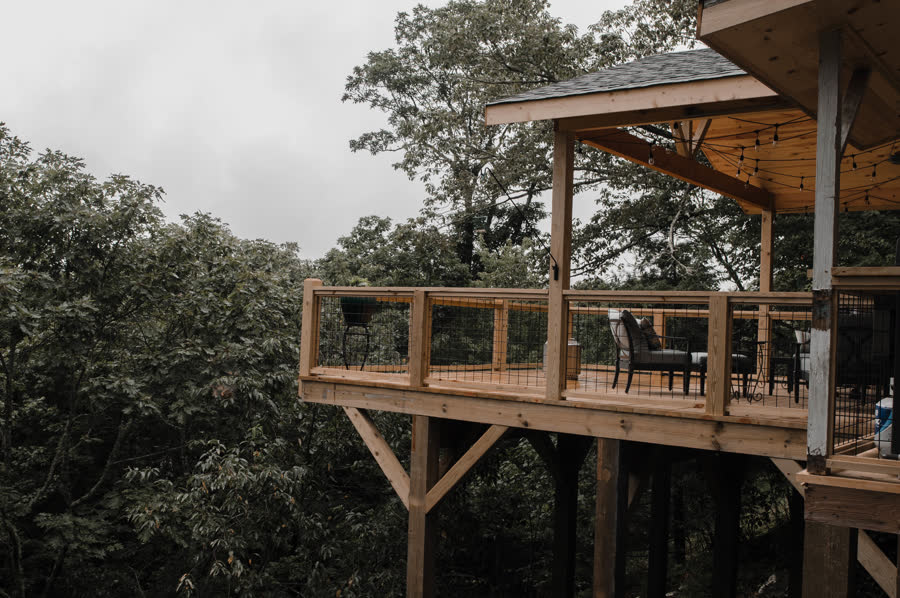
The deck is where people actually live in a mountain house. It’s also the part of the property taking the most abuse — sun, wind-driven rain, snow load, and a freeze-thaw cycle that runs all winter.
Decks are easy to build adequately and not much harder to build well. The difference doesn’t show up for years, which is exactly why it gets skipped. Here’s where it matters.
1. The ledger, which is where decks fail
The ledger is the board bolting the deck to the house, and ledger detailing causes more serious deck failures than everything else combined. Two things have to be right:
Flashing. Water running down the wall must be directed out and over the deck, not into the joint between the ledger and the rim joist. That means a flashing that tucks behind the weather barrier above and laps over the ledger below. Get this wrong and you’re rotting the house’s rim joist, not just the deck.
Attachment. Properly sized structural fasteners in the right pattern into solid framing. Not nails, not deck screws, not lag bolts placed wherever they landed.
A freestanding deck on its own posts avoids the issue entirely, and on some designs that’s the better answer.
2. Footings below frost depth
Every winter, water in the soil freezes and expands. A footing that doesn’t go below the frost line gets lifted, and it doesn’t come all the way back down. Do that repeatedly and you get an out-of-level deck, racked railings, and a structure fighting itself.
Frost depth here is deeper than it is down the mountain, and the required minimum is set by your county. This is a case where “we’ve always done it this deep” is not an acceptable answer — the number comes from the code official.
3. Hardware that won’t be gone in five years
Modern pressure-treated lumber is corrosive to ordinary steel fasteners, and mountain moisture accelerates it. Hangers, bolts, screws, and post bases all need to be hot-dipped galvanized or stainless, and they need to match — mixing metals in a wet connection creates galvanic corrosion, which eats the connection from the inside.
This is invisible, it’s a small percentage of the deck’s cost, and it’s the thing most likely to be quietly downgraded on a low bid.
4. Letting the structure dry
Decks rot where water sits and can’t leave. The usual culprits are wood-to-wood contact with no path for drainage, debris packed into joist gaps, and end grain sitting in standing water.
Practical measures: joist tape over the tops of joists and beams so water doesn’t sit on the framing, correct board spacing so debris falls through rather than composting in the gaps, and post bases that hold posts up off concrete instead of setting them in it. A post set in concrete is a post wicking water into its end grain forever.
5. Planning for where the snow goes
If the deck sits under a metal roof, snow is going to come off that roof in one fast slab. That’s a load on the deck and a hazard for anyone under it.
Snow guards where the slide zone crosses a deck, an entry, or a walkway. And the deck’s own snow load has to be considered, particularly for covered porches and anything with a roof of its own — a roofed porch is a structure, and it gets designed like one.
6. Choosing decking honestly
Both real options work up here; they trade differently.
Pressure-treated and cedar cost less up front, look like wood because they are, and require real maintenance — cleaning and re-sealing on a cycle. At elevation with this much UV and this many freeze-thaw cycles, that cycle is shorter than the label suggests. Skipped maintenance shows up fast.
Composite costs more initially and mostly eliminates the maintenance. It doesn’t eliminate the framing questions — the structure underneath a composite deck rots exactly like any other structure, so everything above still applies.
There’s no wrong answer. There is a wrong reason: choosing based only on the up-front number without pricing in what you’ll spend keeping it up.
The thing worth remembering
A deck built correctly costs somewhat more than a deck built adequately, and the gap is small — mostly hardware, flashing, and footing depth. The gap at year fifteen is the difference between a deck you maintain and a deck you replace.
Planning a deck or a covered porch? We’ll walk your site and talk through what it needs. Call 828-260-0772.
More from the job site
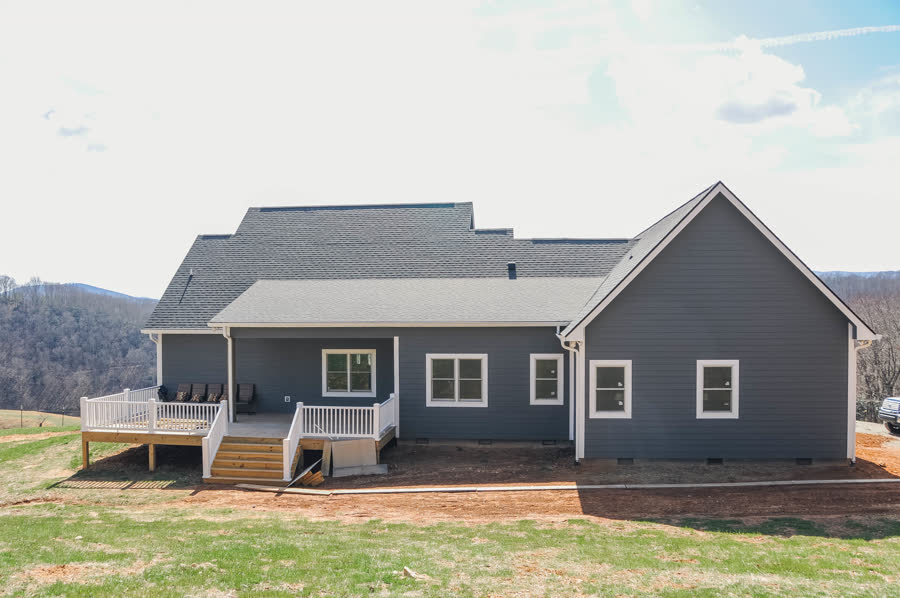
Before You Buy That Mountain Lot: 7 Things to Check First
A view is the easy part. Access, water, septic, and slope are what decide whether a High Country lot is buildable — and what it costs to build on.
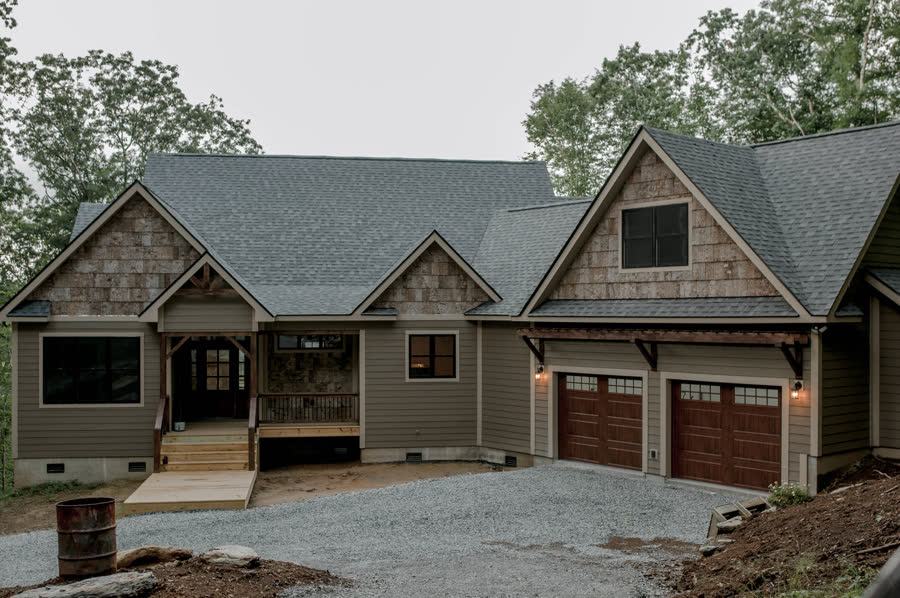
Why a Mountain Home Isn't Just a Piedmont Home at Elevation
Wind-driven rain, ice, freeze-thaw, and snow load change how a house has to be detailed. Here's what we build differently above 3,000 feet.